



What is Radial Shockwave Therapy?

Radial shockwave therapy is a non-invasive treatment that delivers controlled acoustic pressure waves into a targeted area of the body. It is most commonly used for persistent tendon and soft-tissue conditions that have failed to settle fully with rest, exercise or other conservative treatment.
Despite its name, shockwave therapy does not involve an electrical shock. The treatment head is placed against the skin and delivers a series of rapid mechanical pulses into the affected tissue.
At Back Pain Solutions, shockwave therapy is not provided as a standalone quick fix. We begin by reviewing your symptoms and medical history, examining the affected area and determining whether shockwave is appropriate for your particular condition.
Where suitable, your first treatment can normally be performed during the same appointment.

What Can Shockwave Therapy Help With?

Plantar Fasciitis and Heel Pain
Achilles Tendinopathy
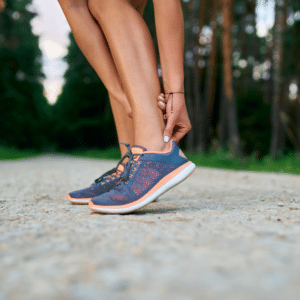
Achilles tendinopathy affects the strong tendon connecting the calf muscles to the heel. It can cause pain, stiffness, tenderness or thickening at the back of the ankle, particularly during walking, running or first thing in the morning. Symptoms may develop after changes in activity, training load or footwear, although they can also occur without an obvious trigger. If the tendon remains repeatedly overloaded, symptoms can become persistent and begin to limit exercise or everyday activity.
Tennis Elbow
Golfer’s Elbow

Rotator Cuff Tendinopathy
Rotator cuff tendinopathy affects the tendons that help control and stabilise the shoulder. It can cause pain when reaching overhead, lifting, dressing, exercising or lying on the affected side. Symptoms may develop gradually through repeated loading or follow a sudden increase in activity. In some cases, calcium deposits can form within one of the shoulder tendons and contribute to ongoing pain and restriction.

Patellar Tendinopathy
Patellar tendinopathy affects the tendon connecting the kneecap to the shin and is sometimes known as jumper’s knee. It commonly causes pain just below the kneecap during running, jumping, squatting, climbing stairs or prolonged sitting. The condition often develops when the tendon is repeatedly exposed to more load than it can comfortably tolerate. Symptoms can gradually interfere with sport, exercise and everyday movements if the underlying loading problem is not addressed.
Plantar Fasciitis and Heel Pain
Achilles Tendinopathy
Achilles tendinopathy affects the strong tendon connecting the calf muscles to the heel. It can cause pain, stiffness, tenderness or thickening at the back of the ankle, particularly during walking, running or first thing in the morning. Symptoms may develop after changes in activity, training load or footwear, although they can also occur without an obvious trigger. If the tendon remains repeatedly overloaded, symptoms can become persistent and begin to limit exercise or everyday activity.
Tennis Elbow
Golfer’s Elbow
Rotator Cuff Tendinopathy
Rotator cuff tendinopathy affects the tendons that help control and stabilise the shoulder. It can cause pain when reaching overhead, lifting, dressing, exercising or lying on the affected side. Symptoms may develop gradually through repeated loading or follow a sudden increase in activity. In some cases, calcium deposits can form within one of the shoulder tendons and contribute to ongoing pain and restriction.
Patellar Tendinopathy
Patellar tendinopathy affects the tendon connecting the kneecap to the shin and is sometimes known as jumper’s knee. It commonly causes pain just below the kneecap during running, jumping, squatting, climbing stairs or prolonged sitting. The condition often develops when the tendon is repeatedly exposed to more load than it can comfortably tolerate. Symptoms can gradually interfere with sport, exercise and everyday movements if the underlying loading problem is not addressed.
How Does Radial Shockwave Therapy Work?
Radial Shockwave Therapy is a non-invasive treatment method that delivers acoustic waves to injured tissues in the body. This promotes regeneration and reparative processes of the bones, tendons, and other soft tissues.
A handheld treatment head is placed against the skin over the affected area. The device then delivers a controlled series of rapid pressure waves into the underlying tissue.
The acoustic waves stimulate metabolic activity and enhance blood circulation, thereby accelerating the healing process. Unlike other treatments, Shockwave Therapy directly targets the root cause of pain without the need for surgery or medication, making it a preferred choice for many patients and clinicians.
Treatment settings are adjusted according to the area being treated, your diagnosis and your individual tolerance.
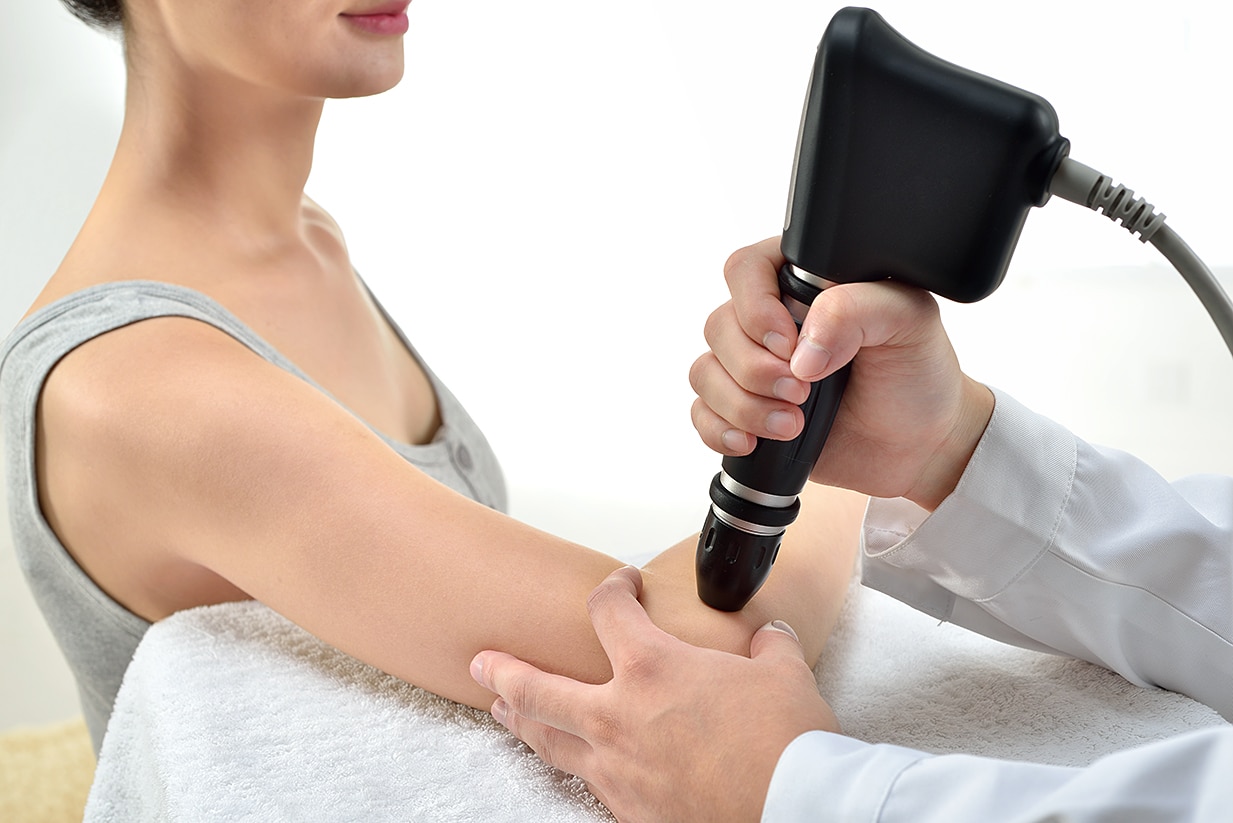


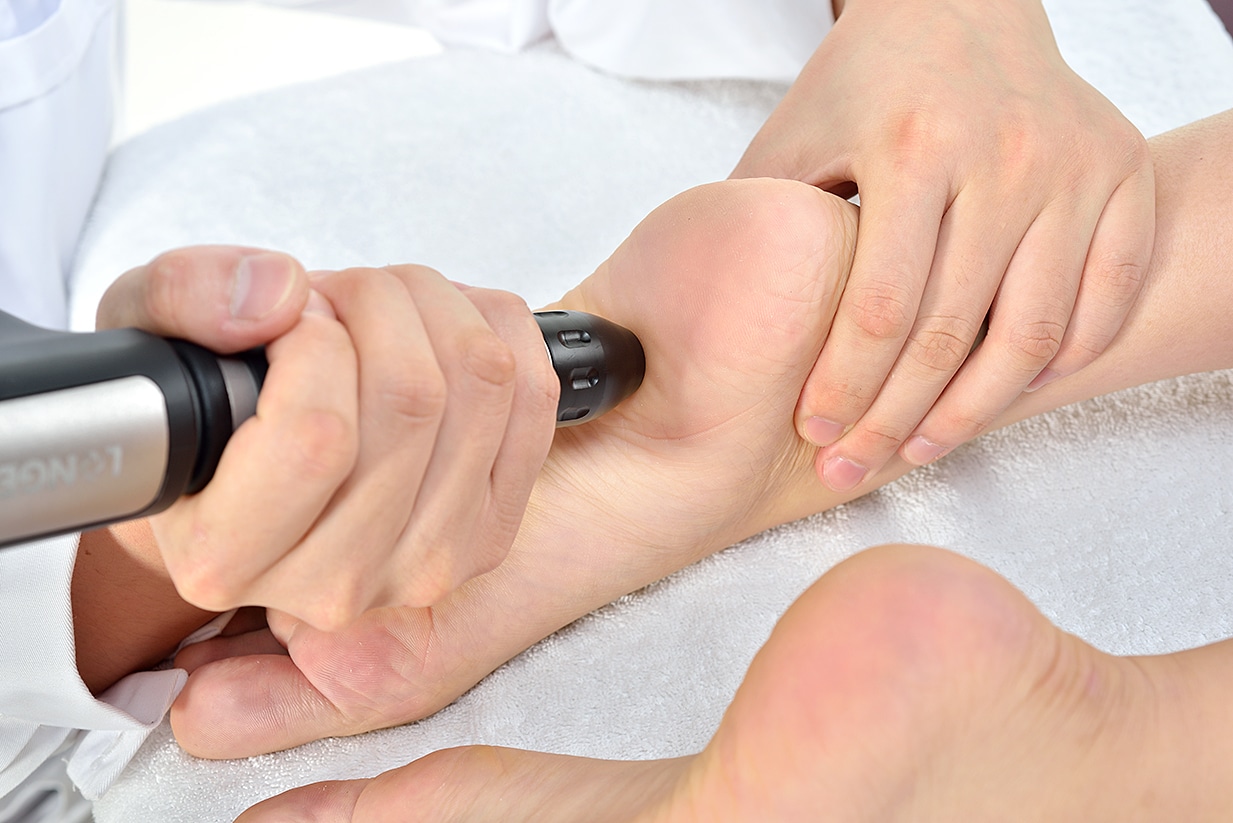
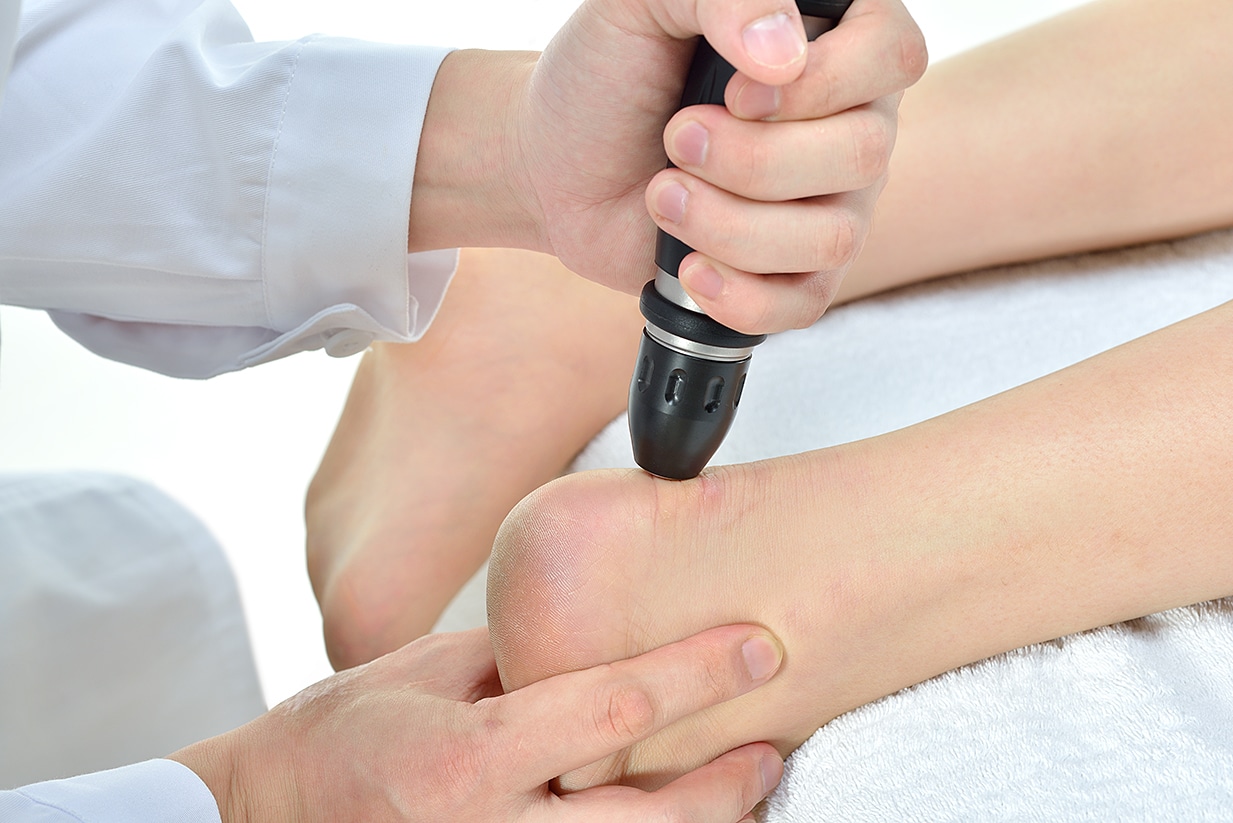
Your initial shockwave therapy appointment lasts approximately 45 minutes. During the appointment, we will:
- Discuss your current symptoms and relevant medical history.
- Review any previous diagnoses, scans or treatment you have received.
- Examine the painful area and assess the surrounding joints and tissues.
- Explain whether shockwave therapy appears appropriate.
- Discuss the recommended treatment and rehabilitation plan.
- Perform your first round of radial shockwave therapy where it is clinically appropriate and safe to do so.
Please bring details of any relevant medical conditions, medication, scans or previous treatment to your appointment.
If you have been struggling with persistent heel, Achilles, elbow, shoulder or knee tendon pain, book an initial consultation to establish whether radial shockwave therapy is appropriate for you. Where suitable, your first treatment will be completed during the same appointment.
Why Choose Back Pain Solutions?
Don’t let the name fool you; while Back Pain Solutions was founded with a particular focus on spinal pain, we’ve since expanded to become a comprehensive musculoskeletal clinic. Today, we regularly help patients with conditions affecting the shoulders, elbows, hips, knees, feet and ankles, alongside the back and neck.
The addition of radial shockwave therapy is another step in that journey, allowing us to offer an evidence-based treatment option for a range of persistent tendon conditions. Whatever the location of your pain, our aim is to combine the right diagnosis, the right treatment and the right rehabilitation to to give you the best possible chance of making a full and lasting recovery.
We believe shockwave therapy works best as part of a comprehensive management plan rather than as a standalone treatment. Every treatment plan is tailored to the individual, taking into account your symptoms, lifestyle, goals and the demands you place on your body. Where appropriate, we’ll also provide advice on activity modification, strengthening exercises and long-term management to help maximise your recovery.
Conveniently located in London Colney, we regularly help patients from St Albans, Hatfield, Radlett, Shenley, Colney Heath and the surrounding Hertfordshire area.
FREQUENTLY ASKED QUESTIONS